What Causes Toothache? Common Causes and Treatments
Most people don’t pay much attention to a tooth until it starts hurting. Here are the problems dentists commonly look for: toothache Causes and Treatments
Maybe you take a sip of cold water and suddenly feel a sharp sting. Perhaps chewing on one side becomes uncomfortable. For some people, the pain comes and goes for days. For others, it arrives at night and makes sleeping difficult.
Whatever the pattern, a toothache is worth paying attention to.
The cause may be something relatively straightforward, such as sensitivity or a small cavity. On the other hand, pain can also come from an infection, a cracked tooth, unhealthy gums, or a troublesome wisdom tooth. That’s why treating the pain alone isn’t enough. You need to know what’s causing it and to get appropriate toothache treatments
Why Does a Tooth Start Hurting?
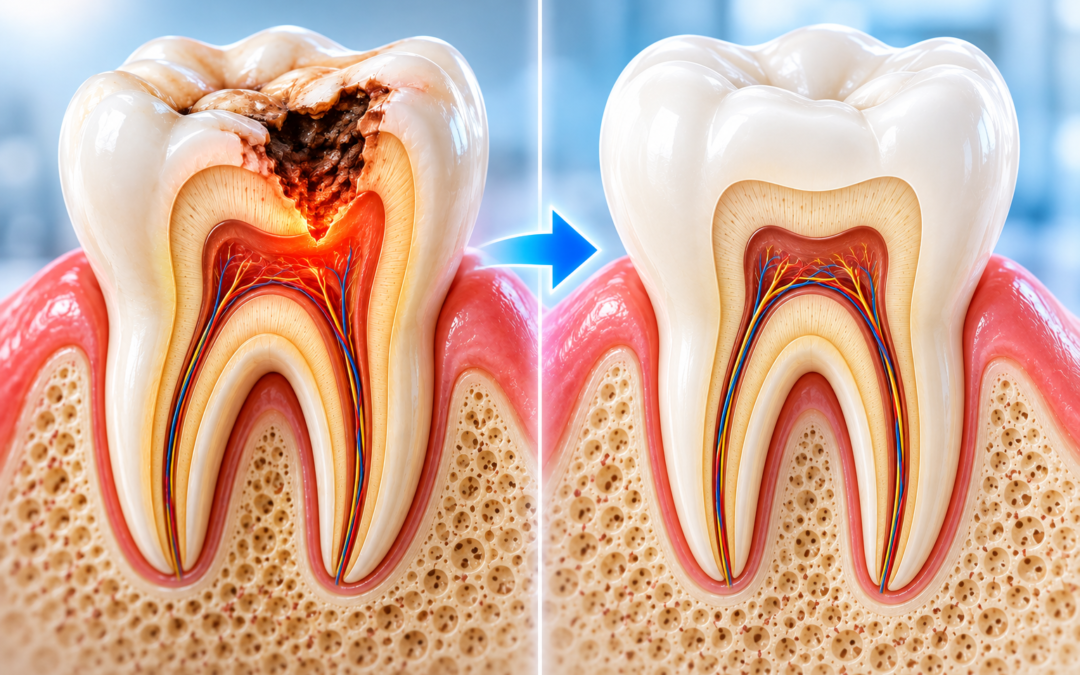
A tooth is harder on the outside and much more sensitive on the inside. Basically, know the toothache causes and treatments.
Enamel forms its tough outer covering. Underneath sits dentine, and deeper still is the pulp, where the nerves and blood vessels are located. Problems become painful when irritation, decay, damage, or infection affects sensitive parts of the tooth or the surrounding tissues.
The interesting part is that toothache doesn’t always feel like an “ache.”
One person might feel a quick sting after eating ice cream. Someone else may have a dull pain every time they chew. Another person might be kept awake by a tooth that seems to throb without stopping.
Those differences matter. They can give a dentist useful clues about where the problem may be coming from.
What Are the Common Causes of Toothache?
1. Tooth Decay – Toothache Treatments.
A cavity rarely appears overnight.
Dental plaque builds up on teeth, and bacteria within it use sugars from food and drinks. The acids produced during this process can gradually damage the tooth surface.
At first, you might not feel anything at all.
As the damage progresses, though, the tooth may start reacting to sweet foods or changes in temperature. A cold drink might suddenly hurt. Chocolate might produce a short, sharp sensation. Food may also keep getting stuck in the same spot.
That is often the point when people realise something isn’t quite right. If toothache starts, don’t delay toothache treatments.
A cavity found at this stage may be easier to manage than one that has been allowed to progress much deeper.
2.Infection Inside a Tooth – Causes and Treatments.
Decay isn’t the only problem that can reach the centre of a tooth. Cracks and injuries can sometimes give bacteria another route inside.
Once the pulp becomes badly inflamed or infected, the character of the pain can change.
Instead of a quick burst of sensitivity, the tooth might continue aching after you’ve finished eating. Biting on it may hurt. Some people describe a pulsing or throbbing sensation, particularly when trying to sleep.
This kind of problem needs a dental assessment. Taking pain medicine may make the day more manageable, but it won’t repair the affected tooth.
3. Treatment for Toothache due to Dental Abscess
Sometimes an infection leads to a pocket of pus around a tooth or in the nearby gum. This is known as a dental abscess.
Possible warning signs include:
- Strong tooth pain that doesn’t settle
- Swelling near the painful tooth
- Soreness when chewing
- Tender or swollen gums
- An unpleasant taste in the mouth
- Fever or feeling unwell in some cases
This isn’t something to wait out at home. Treatment for toothache due to a dental abscess should not be delayed.
An abscess needs professional attention because the dentist has to deal with the source of the infection, not just the pain it creates.
4. Treatment for Toothache due to Gum Problems
Here’s something people sometimes overlook: the painful tooth may not actually be the main problem.
Gums can become inflamed too.
You may first notice blood on your toothbrush or when cleaning between your teeth. The gums might look red, feel sore, or appear swollen. Bad breath can also become troublesome.
When gum disease progresses, it can begin affecting the tissues that support the teeth.
So, if a tooth feels uncomfortable and the gum around it frequently bleeds or swells, mention both symptoms at your dental appointment.
5.A Cracked Tooth
This one can be surprisingly difficult to figure out on your own.
Imagine biting into something and feeling a sudden, sharp pain in one particular tooth. You stop chewing, and a moment later the pain is gone. Then it happens again at another meal.
A crack could be responsible.
Teeth can crack after an injury, from biting hard objects, because of repeated heavy pressure, or when a tooth has already been weakened.
And no, every crack isn’t easy to spot in the mirror. If toothache continues, get the treatment for toothache from the dentist immediately.
A dentist may need to examine the tooth closely to work out where the pain is coming from and whether the tooth can be restored.
6. Sensitive Teeth
That familiar “zing” after drinking something icy can come from tooth sensitivity.
Enamel wear, exposed dentine, and receding gums are among the reasons a tooth can become more reactive to temperature.
Occasional sensitivity doesn’t always mean there’s a major dental problem. Still, a new sensitivity that keeps returning deserves attention.
Why? Because cavities, cracks, and damaged restorations can produce similar symptoms.
Rather than assuming you simply have sensitive teeth, it makes sense to find out why the sensitivity has started.
7. Wisdom Tooth Trouble
Wisdom teeth often arrive when there isn’t much room left for them.
A wisdom tooth may only partly emerge through the gum. That can leave an awkward area around the tooth where food and bacteria are difficult to clean away.
The gum at the back of the mouth may then become sore or swollen. Chewing can become uncomfortable, and occasionally opening the mouth becomes difficult.
Not every wisdom tooth needs to be removed. A dentist will look at its position, symptoms, and surrounding tissues before recommending what to do next.
8. Grinding or Clenching Your Teeth – Causes and Treatments.
You can have painful teeth without having a cavity.
People who clench or grind their teeth may put considerable pressure on them, often without knowing they’re doing it. Grinding is particularly easy to miss when it happens during sleep.
Some clues are:
- Aching or sensitive teeth
- A tired or painful jaw in the morning
- Flattened or worn tooth surfaces
- Headaches after waking
- Small cracks or chips
If the pattern suggests grinding, the dentist can check for wear and discuss suitable ways of protecting the teeth.
How Can a Dentist Find Causes of Toothache and Treatments?
- Filling a cavity: Damaged tooth material is removed, and the cavity is restored. This is often an option when decay hasn’t destroyed too much of the tooth.
- Root canal treatment: If the pulp has become badly inflamed or infected, treatment may involve removing the affected tissue from inside the tooth, cleaning the canals, and sealing them. The goal is to retain the tooth when it can be predictably restored.
- Placing a crown: A tooth that has lost a considerable amount of its structure may need more protection than a filling can provide. A crown covers the remaining tooth and helps restore function.
- Cleaning the teeth and gums professionally: Plaque and hardened deposits around the gums may need to be professionally removed when gum health is contributing to discomfort.
- Treating gum disease: Care varies according to how far the condition has progressed. Some patients need professional cleaning and changes to their daily oral hygiene, while others need more involved periodontal care.
- Managing an abscess: The priority is dealing with the infection and its source. Drainage, root canal treatment or extraction may be considered depending on the individual tooth.
- Removing a tooth: Occasionally, damage is so extensive that predictable repair isn’t possible. In those situations, extraction may be recommended after the available options have been assessed.
- Treating a troublesome wisdom tooth: Repeated pain or infection around a wisdom tooth may eventually make removal the most appropriate option.
- Protecting teeth from grinding: When clenching or grinding is causing damage, a dentist may suggest a protective appliance and look at factors contributing to the habit.
Antibiotics are sometimes needed for dental infections; they are not the only solution for toothache causes and treatments, but they aren’t an all-purpose answer to tooth pain. The dental problem itself may still need treatment.
Why Is It Better to Treat Tooth Pain Early?
Waiting is understandable when the pain is mild. Unfortunately, dental problems don’t always stay at the same stage.
Consider a small cavity. At one point, restoring the damaged area may be fairly straightforward. Give the decay enough time to move deeper, however, and the treatment needed to save the tooth can become more involved.
Early dental care can help in several ways.
There may be more of the natural tooth to save. Treating damage before it becomes extensive gives the dentist more healthy tooth structure to work with.
Eating becomes comfortable again. People with tooth pain often start chewing on the opposite side without even noticing. Once the cause is treated, normal chewing can become easier.
You reduce the chance of a nasty surprise. Severe tooth pain has an unfortunate habit of appearing at inconvenient times. Regular dental care can uncover certain problems before they reach that stage. Get immediate toothache treatment.
Treatment may be simpler. A problem caught early may not require the same level of treatment as one that has been progressing for months.
What If You Simply Ignore the Pain?
This is where toothache can be deceptive.
Suppose your tooth hurts badly for two days and then suddenly feels better. It is easy to assume the problem has healed.
That isn’t necessarily what happened.
The symptoms of a dental problem can change as the condition develops. Meanwhile, decay may be getting deeper, a crack may be worsening, or infection may still be present. At this time, toothache treatment is unavoidable
Putting off treatment can mean losing the opportunity to deal with the problem while it is relatively small.
There are practical consequences too. Persistent tooth pain can interfere with sleep, make meals unpleasant and turn an ordinary dental appointment into an urgent one.
Infections need particular attention. Significant swelling of the face or neck, especially when accompanied by trouble breathing, swallowing or speaking, requires urgent medical care. So don’t ignore toothache treatment.
What Can You Do While Waiting for Your Appointment?
You may have to manage the discomfort for a short period before seeing a dentist.
Keep brushing, but be gentle around the sore area. If cold or very hot foods set the tooth off, avoid them for the moment. Softer foods can also make eating easier when chewing is painful.
A warm salt-water rinse may feel soothing for some people. An appropriate over-the-counter pain medicine may also help temporarily when taken according to its directions and when it is safe for you to use.
The important word here is temporarily.
Home measures can make a painful tooth easier to tolerate. They cannot fill a cavity, repair a crack, or remove the source of an infection. So don’t wait until severe pain. Get toothache treatment when you feel slight pain
When Should Toothache Be Checked?
Don’t judge the problem only by how much it hurts.
Arrange a dental visit when pain keeps returning, lasts rather than settling, makes chewing difficult, or begins disturbing your sleep.
Swelling, fever, worsening pain, a bad taste associated with the painful area, or difficulty opening the mouth are additional reasons to seek prompt dental advice.
And if swelling begins interfering with breathing or swallowing, treat that as an emergency rather than waiting for a normal dental appointment. Regular dental checkups will prevent your teeth and the need for toothache treatments
Conclusion
A painful tooth is easy to put off when the discomfort is still manageable. That’s often when people tell themselves they’ll book a dentist “if it gets worse.”
There is a better time to investigate it: before it gets worse.
Tooth decay, inflamed gums, infection, cracks, sensitivity, wisdom teeth and grinding can all make a tooth hurt. Some are relatively simple to manage when caught early. Others need more involved treatment, particularly after the problem has been allowed to progress.
A dentist can work out toothache causes and treatments and which situation you’re dealing with and whether you need something as straightforward as a filling or cleaning, or treatment such as a crown, root canal or extraction.
So don’t spend weeks trying to guess what a painful tooth is telling you. If the discomfort persists, returns or is accompanied by swelling, get it examined. Finding the reason early gives you the best opportunity to deal with the problem before toothache starts controlling what you eat, how you sleep, and how you spend your day.
Frequently Asked Questions About Toothache
My tooth hurt yesterday but feels fine today. Do I still need to worry?
Pay attention to what happens next. A single brief episode may have a simple explanation, but pain that disappears and later returns deserves a closer look. Dental problems don’t always hurt continuously, so a pain-free day doesn’t prove that everything underneath is healthy.
Does tooth pain usually mean I have a cavity?
Not always. Cavities certainly cause toothache, but they’re only one possibility. A dentist may also look for a crack, irritated gums, infection, exposed sensitive areas, problems around a wisdom tooth, or signs that you’ve been clenching or grinding.
I’ve taken antibiotics before for a painful tooth. Can I do that again?
Don’t reuse old antibiotics or start them without professional advice. Some dental infections require antibiotics, while many painful dental conditions need a procedure that deals directly with the tooth. Your dentist can decide what toothache causes and what treatments are appropriate after examining the problem.
If my tooth hurts badly, does that mean I’ll need root canal treatment?
Pain alone doesn’t decide that. A shallow cavity, cracked filling, gum problem, and an infected pulp can all hurt, yet their treatments are quite different. The condition of the tooth matters more than the pain score.
Why does cold water hurt one tooth but not the others?
That tooth may have exposed dentine, worn enamel, gum recession, decay or another source of sensitivity. Notice how long the sensation lasts and mention it to your dentist, especially if it is new or becoming stronger.
Can I prevent every toothache?
Probably not every one—teeth can still crack or be injured, for example. But good habits can lower the chances of several common dental problems. Brush twice a day thoroughly with fluoride toothpaste, clean between the teeth, avoid constantly snacking on sugary foods, and keep up with dental examinations to prevent toothaches and toothache treatments